Why Are Gas Boilers “A-Rated” While Electric Boilers Get a “D”?

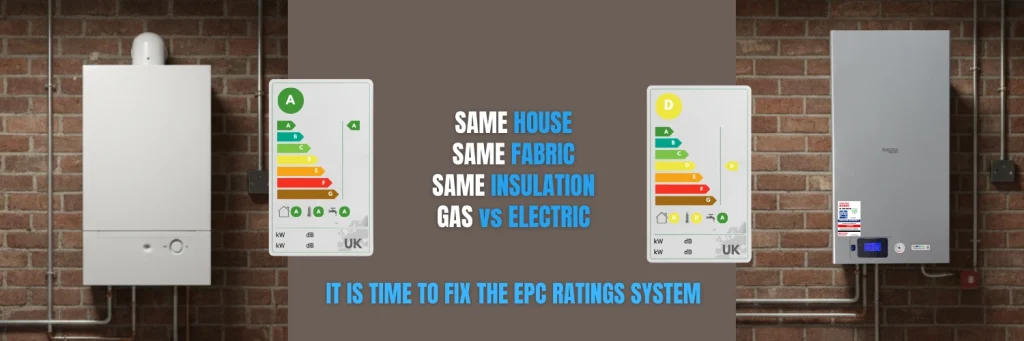
If you’ve looked at an Energy Performance Certificate (EPC) recently, you might have noticed something odd. A gas boiler that burns fossil fuels and produces carbon monoxide can be stamped with an A. An electric boiler, almost 100% efficient at the outlet, producing no emissions in your home, often gets marked as a D. Confused? You’re not alone.

The EPC puzzle

EPCs were designed to provide homebuyers and landlords with a quick and easy way to compare properties. One letter, A to G, to show how “efficient” a home is. The idea is simple. The reality is more complicated.
Here’s the catch: EPCs aren’t really measuring what happens in your home. They’re based on models that use fuel price assumptions and grid factors.
Gas is cheaper per unit of energy, so homes with gas boilers tend to score better. Electricity costs more per unit, so homes with electric heating get marked down – even though the system is nearly 100% efficient in the home.
That’s how you can spend thousands on insulation, glazing, solar panels or a new heating system, and still see your EPC score drop.


Why it matters

EPCs are more than just a piece of paper. They:
– Influence the value of your home.
– Decide if a landlord can rent out a property.
– Affect eligibility for green funding or mortgage products.

When the score doesn’t reflect reality, it can mislead both homeowners and installers.

The government’s own consultation admits the obvious: EPCs can’t keep using fuel costs as the headline. Price assumptions don’t align with emissions, and they swing around with the market. That’s why a gas boiler burning fossil fuels can look like an “A” while an electric boiler, 99% efficient at the outlet, gets a “D”.

The fix on the table is a new heating system metric. It would score the technology itself — not just what today’s tariffs happen to say. Gas at the bottom, efficient electric and low-carbon tech at the top.
That matters, because changing a heating system is expensive and disruptive. People need clear, consistent guidance. Not a certificate that shifts when wholesale prices move.


Reform is on the way, we hope.

The government has recognised the problem. In a consultation on EPC reform, it admitted that the current approach — a single letter based heavily on fuel prices — doesn’t support the transition to clean heat.

The plan from 2026 is to replace that single score with four headline metrics:

Fabric performance: how well your home holds heat.
Heating system: what technology you use, and how efficient/clean it is.
Smart readiness: how well your home works with batteries, EVs, and flexible tariffs.
Energy cost: what it’s likely to cost to run.

That’s progress. But until those changes arrive, EPCs will continue to make electric heating look worse than it really is.


The logical fix

For EPCs to be truly useful, they should measure three things side by side:
Cost (what you’ll pay).
Carbon (your emissions footprint).
Consumption (what the home actually uses at the socket).

That way, consumers and installers can make decisions based on facts, not flawed assumptions.


What this means for you

Homeowners: Don’t panic if your electric boiler or heat pump looks under-rated on your EPC. The system is outdated, not your choice of heating. Look instead at your actual bills, comfort, and emissions.

– Installers: This is a chance to educate customers. Point out that electric systems are efficient in the home, and that EPC reform is coming to reflect that. Customers need reassurance that they haven’t made a “bad” choice just because the paperwork says D.

Gas boilers may carry an “A” sticker today, but that doesn’t make them cleaner or smarter. Electric boilers and heat pumps deliver near 100% efficiency or more in the home and produce no emissions at the point of use.

EPC reform is on the horizon. Until then, remember: the letter on your certificate isn’t the whole story.

Over a Decade of Warmth: 10+ Years of Happy Customers with the UK’s First Electric Combi Boilers

More than ten years ago, we had a radical idea:
What if the UK could heat its homes without gas—reliably, efficiently, and instantly?
No cylinders, no tanks. Just one wall-hung electric combi boiler that could do it all: deliver central heating and hot water on demand.

Fast forward to today, and that idea isn’t just a reality—it’s become the heating solution of choice for thousands of homes, installers, and property managers across the UK. And we’re still just getting started.

The First of Its Kind in the UK

Back in 2013, Electric Combi Boilers Company introduced the first wall-hung 12kW electric combi boiler to the UK market. Until then, electric heating options were clunky, slow, or limited to point-of-use systems. Our mission was to design something different—something future-proof.

We partnered with leading Italian manufacturers and developed a range of electric boilers built specifically for the UK electrical infrastructure, housing stock, and customer expectations.

Not only did we bring the first true electric combi boiler to the market—we’ve continued to refine, upgrade, and expand our offering ever since.

✅ First UK-designed wall-hung electric combi
✅ Instant hot water—no preheating, no cylinder
✅ Designed for 80A–100A fuses (no DNO upgrades required)
✅ Available from just 12kW—perfect for flats, studios, small homes, and low-energy builds

10+ Years of Happy Customers

Over the past decade, our boilers have been installed in:

  • City flats in London
  • Off-grid homes in Cornwall
  • New-build apartments in Manchester
  • Refurbished cottages in Scotland

We’ve served thousands of customers ranging from first-time buyers to commercial landlords—and a huge number of them have become repeat customers, recommending us to family, tenants, and fellow installers.

Don’t just take our word for it. Our Trustpilot and Google reviews speak volumes about what it means to have direct access to a dedicated UK support team, a reliable product, and fast after-sales service.

We don’t hide behind call centres—we solve problems.

“The support has been amazing. A real person helped me configure the boiler over the phone. Can’t fault them.”
Actual customer feedback, Trustpilot

Why Electric? Why Now?

The last few years have put electric heating on the map. With new builds going electric, heat pumps gaining popularity, and gas boilers on their way out, customers are now asking the questions we’ve been answering since 2013:

  • Can I go gas-free without compromising on comfort?
  • Will an electric boiler really heat my home efficiently?
  • What about hot water—will it be instant?

Yes, yes, and yes. With a 99% efficiency at the point of use and no flue, no gas, and no cylinder, electric combi boilers are increasingly seen as a clean, convenient alternative—especially in well-insulated homes.

We’re proud to have led the market, not followed it.

Trusted by Installers, Loved by Customers

Our electric combi boilers are trusted by hundreds of registered installers across the UK. Whether it’s a straightforward replacement or a full electric-first retrofit, we provide all the guidance and support needed—from fuse checks to flow rate advice and wiring diagrams.

And with up to 10 years warranty available on our ELEKTRA SMART range (5 years standard on GUIVAL), we back up our claims with commitment.

A Quiet Revolution—One Boiler at a Time

It’s easy to overlook the little things that make a big difference: a warm flat on a cold morning, a hot shower that doesn’t require waiting, the peace of mind that your heating is safe, clean, and future-proof.

That’s what we’ve delivered for over a decade—and will continue to do for decades to come.

🔗 Learn more about our boilers: www.electriccombiboilerscompany.com
🔧 Interested in installation? Our in-house team can guide you.
🛠️ Are you a trade professional? Join the growing network of UK installers working with us.

👋 Ready to go gas-free—without the drama?

Let’s talk. We’re not here to sell you a boiler. We’re here to help you find a smarter solution.

Cutting Costs: Smart Ways to Reduce Energy Consumption with Your Electric Combi Boiler

Let’s explore some strategies to help reduce energy consumption with your Elektra Compact boiler:


Adjust Boiler Flow Temperature: Lowering the boiler’s flow temperature can enhance efficiency. Setting it to around 60°C can reduce energy usage while maintaining comfort. This adjustment can often be made via the boiler’s control panel. 


Utilize Eco Mode: The Elektra Compact boiler offers an “Eco” mode designed to optimize energy consumption. Switching from “Comfort” to “Eco” mode can prevent the boiler from maintaining constant high temperatures, thereby saving energy. Ensure you’re familiar with toggling between these modes; if you need guidance, refer to the user manual or instructional videos. 


Optimize Thermostat Placement and Settings: Ensure the thermostat is located in a frequently used room, away from drafts, direct sunlight, or heat sources, to provide accurate temperature readings. Maintaining a consistent temperature between 18-21°C can help manage energy consumption effectively. 


Implement Zonal Heating: If possible, heat only the rooms that are in use. This targeted approach can significantly reduce unnecessary energy expenditure.


Regular Maintenance: Bleeding radiators to eliminate trapped air ensures efficient heating. Additionally, scheduling annual boiler services can identify and rectify issues that may cause excessive energy use. 


Enhance Home Insulation: Proper insulation in walls, lofts, and floors helps retain heat, reducing the workload on your boiler. Simple measures like draught-proofing doors and windows can also make a noticeable difference.
In addition to optimizing the boiler settings and heating habits, I recommend checking and possibly switching to a more cost-effective electricity tariff. Here’s what they can do:


Compare Energy Tariffs – Use comparison sites like Uswitch, Compare the Market, or MoneySuperMarket to find the best deals. Some suppliers offer off-peak tariffs that could reduce costs if they can shift some usage to cheaper hours.


Consider Economy 7 or Economy 10 – If their energy usage aligns with off-peak hours, Economy 7 or Economy 10 tariffs may offer lower rates during certain times of the day. However, they should check if their current meter supports these tariffs.


Contact the Energy Supplier – Sometimes, just calling their supplier and asking for a better deal can result in lower costs. Suppliers might offer fixed-rate plans or time-of-use tariffs that better suit their consumption patterns.

What Maintenance Does an Electric Boiler Require for Longevity?

Nothing quite matches the warmth and comfort generated by an electric boiler. But for that labor to pay off requires a little pampering to keep it working soundly for a while. Here are some very simple, obvious electric boiler maintenance tips to get ACTUAL long life.

Understanding Your Electric Boiler

First of all, it’s good to read what you’re working with. With electric boilers, there are no complicated combustion processes like gas boilers so less can go wrong, but they still need attention. They operate by heating water with electric components, and although they tend to be fairly simple in design, monitoring them is the real secret to preventing expensive repairs or sudden malfunctions.

Regular Checks Are Your Best Friend

  1. Inspect the Pressure:

    There is a pressure gauge on your boiler. Look it up regularly to ensure that it sits in the normal range, which is generally between 1 and 1.5 bar when cold. If it’s too low, you should add system water. If it is too high, you might have a problem, such as a leaking pressure relief valve.

  2. Look for Leaks:

    It sneaks up quietly. Watch for humidity around your electric boiler or water spots on your wall or floor. If you do manage to find a spot, that’s when you should call a professional, because even a single droplet can cause consequential damage.

  3. Test the Anode Rod:

    The more common electric boiler with a storage tank does benefit from an anode rod; it sacrifices itself to prevent the tank from rusting. This needs to be checked every year and changed when corroded; a bit like the bodyguard of your boiler, you want it strong enough to protect itself.

Keep It Clean, Keep It Running

  1. Clean or Replace the Filter

    Much like a living organism, if your boiler has a filter (and many do), it’s the lungs of your system. A soiled filter means less effective heating, so clean or replace it as the manufacturer suggests. It could even mean every few months or once a year.

  2. Descale Your System:

    Hard water areas beware! Water build-up within your electric boiler can cause lime scale, which affects your efficiency and damages elements. Descaling is not something you do on a daily basis, however, performing this every few years or as needed can help keep your boiler in tip-top shape.

  3. Dust and Dirt Be Gone:

    Even though electric boilers do not possess the fans as gas-powered boilers but the dust and dirt could still settle on the electrical elements. To avoid overheating, have the brush or cleaning cloth as far from the work environment as possible.

Electrical Health

  1. Electrical Connections:

    Wires or loose connections could ignite or allow your boiler to fail. If you are not bravado enough to check these yourself, as they can be hazardous, you should get an electrician to do an annual inspection.

  2. Test the Safety Devices:

    Your boiler has safety cut-outs or switches that must switch off the power if something is wrong. Test these to make sure they are working if you have no idea how, there should be instructions in the manual, or get a professional.

Don’t Neglect the Out There

  1. External Inspection:

    Take a look at the outside of your electric boiler for any wear and tear. This should include checking the casing for signs of rust or damage that will leave internal components exposed to the elements.

  2. Ventilation:

    Gas boilers require flues, but electric boilers do not, although they can create heat and good air circulation is important. Ensure there is adequate spacing surrounding your boiler, allowing free flow of air.

When to Call the Pros

These maintenance tasks may appear relatively easy, yet some tasks are best left to the professionals:

  • Annual Service: Even if you do all of your basic maintenance correctly, having a professional service the boiler once annually can catch things you would never notice. It’s like an annual health checkup of your boiler.
  • Weird Noises: If your boiler begins to make weird noises, something’s up. Don’t wait until it’s a problem.
  • Declines in Performance: If your heating isn’t as effective, or your bills suddenly jump, a pro can help figure out why.

The Long Game

Servicing is not only about being able to fix a problem but also about finding a way around issues before they happen. Here’s why:

  • Longevity: Getting your boiler serviced regularly increases the lifespan of the appliance tremendously.
  • Save: A well-maintained boiler will use propane more efficiently and will save you more money on your energy bills.
  • Safety: Everything is checked out, and your home is safe from potential hazards such as electrical faults or leaks.


Your electric boiler turns into your old companion who is there to warm you but needs some care now and then in the long run. Following these steps not only protects a machine but also makes sure the house stays cozy home over the years to come. So take a bit of time out to do this and make sure that your boiler is going to be in great condition afterward.

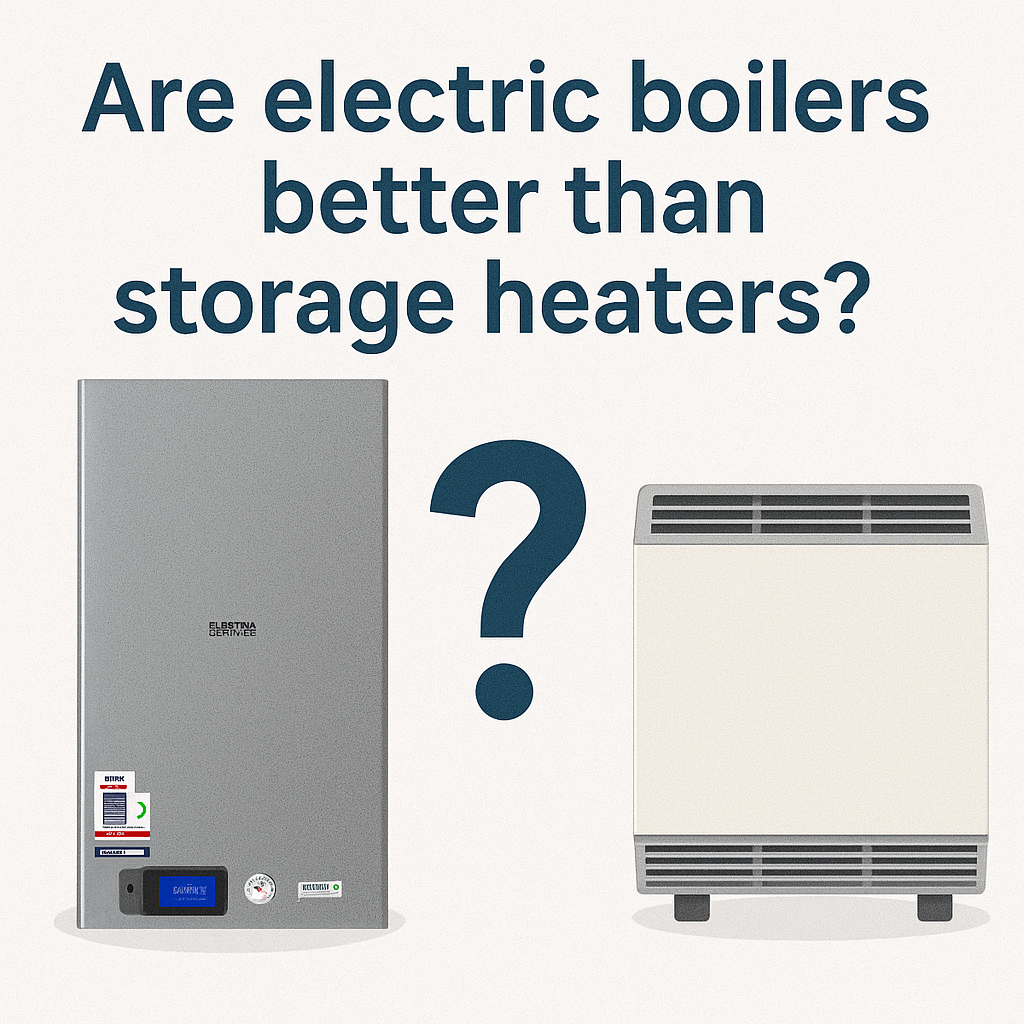
Are electric boilers better than storage heaters?

Electric Boilers vs Storage Heaters: Which One is Right for You?

When considering electric heating solutions for your home, two common options stand out: electric boilers and storage heaters. Each has its strengths and weaknesses, but if you’re looking for efficiency, convenience, and long-term cost-effectiveness, there are some critical factors to consider. In this blog, we’ll compare the two heating systems in terms of efficiency, cost, installation, maintenance, and servicing to help you make an informed decision.

1. Efficiency

Electric Boilers

Electric boilers are highly efficient as they convert nearly 100% of electricity into usable heat. They work by heating water, which then circulates through radiators or underfloor heating systems, providing a consistent and even heat distribution across your home. The biggest advantage of an electric boiler is that it heats all radiators in the house simultaneously, unlike storage heaters, which operate individually.

Storage Heaters

Storage heaters, on the other hand, rely on charging up during off-peak hours (typically at night) and releasing heat throughout the day. While this may seem energy-efficient in theory, it has a major drawback: the heat is released whether you need it or not. If the stored heat is depleted too early in the day, you may be left without warmth when you need it most, unless you switch to expensive on-peak electricity to recharge the heater.

Verdict: Electric boilers provide on-demand heating, making them more reliable and adaptable to your heating needs.

2. Running Costs

Electric Boilers

A key benefit of an electric boiler is that it only heats water when required, reducing wasted energy. Unlike storage heaters, which must be charged overnight regardless of actual usage, electric boilers operate efficiently by responding to your specific heating demands.

Additionally, since an electric boiler powers multiple radiators simultaneously, the overall energy consumption is often lower compared to having several individual storage heaters running throughout the house.

Storage Heaters

While storage heaters benefit from off-peak electricity rates, they can still be costly in the long run because they cannot adapt to fluctuating heating needs. Any excess heat not used during the day is wasted, and if extra heating is needed in the evening, on-peak electricity must be used, which is significantly more expensive than running an electric boiler.

Verdict: Electric boilers tend to have lower running costs because they only use electricity when heat is needed, unlike storage heaters, which consume electricity regardless of usage.

3. Installation

Electric Boilers

Installing an electric boiler is relatively straightforward. It typically requires a single compact unit to be connected to the existing radiator system or underfloor heating. There’s no need for large water tanks or additional storage, making it a space-saving solution.

Storage Heaters

Storage heaters require multiple units to be installed in different rooms, each needing its own dedicated power connection. This makes installation more time-consuming and space-intensive compared to a single electric boiler unit.

Verdict: Electric boilers win in terms of ease of installation, taking up less space and requiring only one unit compared to multiple storage heaters.

4. Maintenance and Servicing

Electric Boilers

Electric boilers are low-maintenance as they have fewer moving parts than gas or oil boilers. However, to maintain warranty and efficiency, it is recommended to have them serviced every one to two years by a qualified technician.

Storage Heaters

Storage heaters require minimal servicing, but if individual units fail, they must be repaired or replaced separately, which can be inconvenient and costly over time.

Verdict: Both require minimal maintenance, but servicing an electric boiler is more straightforward compared to managing multiple storage heaters.

Final Verdict: Which One Should You Choose?

FeatureElectric BoilerStorage Heater
Efficiency✅ High (instant heating)❌ Lower (heat loss possible)
Running Cost✅ Generally cheaper❌ Higher due to heat loss & on-peak use
Installation✅ Easier (one unit)❌ Requires multiple units
Maintenance✅ Low, serviced every 1-2 years❌ Repairs can be complex

Why Choose an Electric Boiler Over a Storage Heater?

Instant heating – No waiting for heat to be released. ✅ More control – Heats when you need it, rather than predetermined times. ✅ Lower running costs – Uses energy only when required. ✅ Space-saving – One compact unit vs. multiple storage heaters. ✅ Even heat distribution – Warms all rooms efficiently.

While storage heaters may seem attractive due to off-peak electricity savings, the lack of flexibility and potential for wasted heat makes them less cost-effective compared to electric boilers. If you want reliable, efficient, and cost-effective heating, an electric boiler is the better choice.


The Importance of Proper Pipe Sizing in the Electric Boilers

Pipe sizing is fundamental, even though most people are extremely careful about it to allow electric boilers to work satisfactorily and reliably. Accurate sizing allows appropriate water flow and subsequent heat transfer so that the system works as effectively as it should. Below are the importance of accurate piping sizing and its role in electrical boiler systems that we will discuss further.

Understand the Fundamentals of Pipe Sizing

Pipework sizing is a very vital engineering activity that enables the determination of the correct size of the pipes to enhance water transport flow in a boiler system. This can improve flow, heat transfer, and system efficiency. Flow rate, pressure drop, and fluid velocity are some factors that determine the pipe size. Taking all these factors into consideration allows the engineers to design a piping system that maximises efficiency and minimises energy consumption.

Why Proper Pipe Sizing is Important

Proper pipe sizing is an important factor for electric boilers to operate effectively and reliably. It is a factor that affects performance, energy consumption, and overall lifespan. Let us discuss the importance of proper pipe sizing in detail.

Efficient Heat Transfer

The flow of the water into the heating elements is adequately done if there are well sized pipes, maximizing heat transfer, therefore reducing energy consumption. With undersized pipes, however, friction and pressure drop increase, elevating energy consumption and reducing the effectiveness of the system.

Pump Load is Reduced

Properly sized pipes decrease pressure drop across the system. The load on the circulation pump is reduced, thus saving energy with an increase in the lifespan of the pump. Reduced pump load also reduces maintenance costs due to pump failures.

Increased System Reliability

Proper pipe sizing also prevents cavitation. Cavitation occurs when the pressure within the fluid is low. Cavitation is dangerous and causes damage to the pipes as well as pumps. Further, it minimizes pressure to system components thus making it last longer.

Improved Comfort of the User

Correct sizing of pipes also ensures proper water temperature throughout the system, which offers maximum comfort to users. An efficient flow of water also allows a quick response to heating. This reduces the waiting time for hot water.

Properly sized pipes will maximize system performance, minimize energy use, and promote comfort in the home. It is crucial to have a qualified HVAC professional design and install your electric boiler system correctly for your specific needs and long, trouble-free service.

Factors That Affect Pipe Sizing

There are several factors that determine the correct pipe size for an electric boiler. These include:

Flow Rate

The volume of water flowing through the system forms one of the most important determinants of pipe size. Higher flow rates require larger pipes so that there is an adequate water velocity.

Pressure Drop

This is pressure loss across the system and depends both on friction and fittings. Higher pressure drops require larger pipes so as to control flow resistance and maintain adequate pressure.

Fluid Velocity

Too high fluid velocity creates noise, vibration, and erosion on the interior of the pipes. Again, low velocity will form sedimentation, and hence, heat transfer will not work efficiently. Thus, fluid velocity should be optimum.

Material

The material of the pipes, whether copper or PEX, determines their thermal conductivity and pressure rating. Copper, for instance, has excellent thermal conductivity, whereas PEX offers flexibility and durability.

Professional Pipe Sizing

There’s only one “just right” size for any application. If the size is a little too large, you will start facing a whole host of problems, efficiency-wise and performance-wise. So, let us dive a little deeper into what happens when you oversize and undersize steam pipelines.

What Will Happen if the Pipe is Oversized?

Cost:A higher pipe size (100 NB instead of 80 NB) uses more material in the pipe itself and installation and insulation.

Energy Loss:The increased surface area of an oversized pipe translates to higher losses from convection and radiation. Wasted energy in this context means producing extra steam that will counter this loss. This also translates to increasing the cost of the produced steam.

Poor Performance Operation:In general, for the same flow rate, oversized pipes would result in a low-pressure drop that could translate into an inefficient use of steam at the point of utilisation.

What Will Happen if the Pipe is Undersized?

Pressure Drop Problems: The pressure drop of under-sized pipes is greater at the same steam flowrate compared to a correctly sized pipe. In other words, the pressure at the user end may be more or less, which has implications for his process, possibly affecting his product as well.

Flow Rate Famine: Because of lower capacity, undersized piping cannot deliver the required amount of steam at the needed flow rate. This “steam starvation” disrupts production schedules and can have a negative impact on product quality.

Water Hammer Risk: Because the flow area is restricted, the velocity of steam in an undersized pipe is much more than normal. This velocity creates a phenomenon known as a water hammer that can create damage through pressure surges and pipe erosion, hence equipment failure.

Conclusion

Proper pipe sizing will play a vital role in the electric boiler system design and installation process. Proper pipe sizing can optimise system performance, minimise energy consumption, and improve comfort for users. A qualified HVAC professional can recommend the proper design and installation of the electric boiler system to cater for your specific requirements with long-lasting and reliable service.

Electric Boilers vs. Traditional Boilers: Which One Saves You More?

Deciding between electric boilers and traditional boilers can feel like choosing between two paths in the woods—each with its own perks, but only one leading to the best outcome for your home and wallet. Whether you’re renovating your space or just replacing an old system, energy efficiency and cost savings are likely top of mind. Let’s break down the differences between these two heating systems so you can choose to warm your home without burning a hole in your pocket.

1. The Basics: How Do They Work?

Let’s start with a quick rundown of how these two systems operate. Traditional boilers, often powered by gas or oil, use fuel combustion to heat water, which then circulates through radiators or underfloor heating systems. On the other hand, electric boilers rely on electricity to heat water, bypassing the need for a fuel source.

While the difference in power sources might seem small, it leads to some significant distinctions in efficiency and costs. Traditional boilers convert fuel into heat through combustion, which can result in energy loss. Electric boilers, in contrast, are often more efficient because they convert almost all the electrical energy into heat.

2. Installation Costs

When considering a new heating system, upfront costs are crucial. Traditional boilers, especially gas systems, typically require more complex installations. You need to factor in not just the cost of the boiler, but also the pipes, vents, and flues to safely expel combustion gases. This can make the installation process longer and pricier. Not to mention, if you don’t already have a gas line installed, that’s an added expense.

Electric boilers, however, are a simpler setup. Without the need for gas lines or flues, installation is quicker and less expensive. It’s almost as easy as plugging in your kettle—though, of course, on a slightly bigger scale!

The real question to ask yourself is, “Do I want to save on installation, or am I looking for long-term savings?” It’s not always a clear-cut answer, but the upfront price difference can weigh heavily on the decision-making process.

3. Running Costs: The Day-to-Day Expenses

Once the system is installed, the real test begins. How much will it cost to keep your home cozy over the years?

Traditional boilers usually have lower day-to-day running costs, particularly in regions where gas is cheaper than electricity. Gas prices tend to be more stable, making budgeting easier over the long run. The efficiency of modern gas boilers has improved dramatically, too, meaning that many traditional systems convert around 90% of the fuel into usable heat. That said, you still have to account for maintenance costs—traditional boilers often need regular servicing to keep them running efficiently and safely.

On the flip side, electric boilers might seem more expensive to run because electricity rates tend to be higher than gas. However, electric boilers offer nearly 100% efficiency, meaning every penny you spend on electricity goes toward heating your home. For homes in areas where renewable energy is abundant or electricity is cheaper, electric boilers could end up being a cost-effective option.

4. Environmental Impact: Going Green

In today’s world, the environmental impact of your boiler should play a role in your decision-making. Traditional gas or oil boilers release carbon dioxide and other pollutants into the atmosphere, contributing to your carbon footprint. Even with more efficient models, the reliance on fossil fuels means there’s always an environmental trade-off.

Electric boilers, however, can be powered by clean, renewable energy. If your home is connected to a grid that relies heavily on solar, wind, or hydroelectric power, your boiler’s carbon footprint could shrink significantly. For environmentally-conscious homeowners, this might tip the scales in favour of electric systems. Plus, as countries continue to move towards greener energy solutions, electric boilers could become an even more sustainable choice in the long run.

5. Maintenance and Longevity: Keep It Running Smoothly

When it comes to maintenance, electric boilers have a clear edge. With fewer moving parts and no need for venting combustion gases, electric systems generally require less maintenance and fewer repairs. Gas boilers, on the other hand, require more regular upkeep—especially when it comes to ensuring safe combustion and preventing carbon monoxide leaks.

That said, even electric boilers can run into issues over time, such as limescale build-up, especially in areas with hard water. Regular descaling is essential to keep things running smoothly.

As for longevity, both types of boilers tend to have similar lifespans, often ranging between 10 and 15 years. However, the reduced need for maintenance and fewer potential safety concerns could make an electric boiler a more reliable choice over time.

6. Space and Flexibility: Room to Breathe

If space is at a premium in your home, electric boilers may be the better fit. Traditional gas boilers are often bulky and require space for ventilation systems and fuel storage. Electric boilers, being more compact, can easily be installed in smaller spaces—whether in a cupboard or a small utility room. This makes them ideal for apartments or smaller homes where space-saving solutions are key.

Another consideration is flexibility. Electric boilers can be installed in more places, even where gas lines don’t reach, such as remote locations. This makes them a versatile option for different types of homes and setups.

7. Safety Considerations: Peace of Mind

Both systems are generally safe when properly maintained, but traditional boilers come with the added risk of gas leaks and carbon monoxide emissions. While these risks can be mitigated with regular servicing and carbon monoxide detectors, it’s still something to keep in mind.

Electric boilers, on the other hand, eliminate this risk entirely, as they don’t rely on combustion. If safety is your top priority, electric systems could offer a little extra peace of mind, knowing there’s no potential for gas-related incidents.

8. The Verdict: Which One Saves You More?

So, which boiler will save you more in the long run? It really depends on your specific circumstances. If gas prices in your area are relatively low and you’re comfortable with more regular maintenance, a traditional boiler could be the more cost-effective option over time. The upfront installation costs might be higher, but the day-to-day running expenses could make up for it.

On the other hand, electric boilers offer a simpler, often cheaper installation process and lower maintenance needs. If you’re willing to pay slightly more for electricity—or if you live in an area where electricity is affordable—electric boilers could offer significant savings. Factor in the potential for green energy use, and electric boilers can be the more environmentally friendly and future-proof choice.

Conclusion

Choosing between electric and traditional boilers isn’t just about upfront costs. It’s about thinking long-term—what’s going to work best for your home, your budget, and the planet. Both systems have their strengths, and the right choice depends on your specific needs and priorities.

As with all big decisions, it’s worth weighing the pros and cons carefully. Ask yourself not just how much money you’ll save today, but also how each boiler aligns with your values—whether those values centre around energy efficiency, environmental impact, or simply having fewer things to worry about.

The Cost-Effectiveness of Electric Boilers: A Comprehensive Analysis

n the race to achieve the UK’s Net Zero by 2050, homeowners are reevaluating their heating systems with sustainability in mind. While gas boilers have long been the standard, the shift towards greener alternatives is gaining momentum. Enter electric boilers—specifically, the ELEKTRA Smart BPC and Guival Small BPL. These modern marvels are not only more eco-friendly but also offer superior efficiency and safety.

In our latest article, we compare these innovative electric combi boilers with a traditional 30kW gas boiler, highlighting the key differences in energy usage, costs, and environmental impact. If you’re considering future-proofing your home and reducing your carbon footprint, this read is a must. Discover why the ELEKTRA Smart BPC and Guival Small BPL might just be the smarter choice for a greener future.

Electric boilers have surged in popularity as homeowners and businesses alike search for energy-efficient heating solutions. This blog will dissect the cost-effectiveness of electric boilers, presenting a thorough analysis without any fluff, aiming directly at the heart of what makes these systems both an economically and environmentally sound choice.

Understanding Electric Boilers: A Primer

Electric boilers are a dynamic alternative to traditional gas or oil-fired boilers. They function by heating water through electrical energy, which is then circulated throughout your home or business to provide heating and hot water. This method is known for its clean operation, absence of combustion gases, and straightforward maintenance requirements.

The Initial Investment: Crunching the Numbers

While electric boilers often come with a higher upfront cost compared to their combustion counterparts, this is only part of the story. The installation process is usually less invasive, as there’s no need for gas lines or exhaust flue systems. This simplicity can reduce initial installation costs, effectively saving dollars off the upfront expense.

Running Costs: Efficiency at Its Core

Electric boilers boast nearly 100% efficiency rates because almost all the electricity they consume is turned directly into heat, with minimal loss. In contrast, traditional boilers typically achieve 80-90% efficiency. This stark difference means electric boilers can deliver significant savings over time, especially in areas where electricity costs are favourable.

Operational Savings: Long-Term Benefits

One of the most appealing aspects of electric boilers is their minimal maintenance requirements. Without the complexities of combustion engines, the likelihood of costly repairs and maintenance decreases significantly. Additionally, electric boilers are not subject to the same regulatory inspections as gas boilers, potentially reducing long-term operational costs.

Environmental Impact: A Greener Alternative

Choosing electric boilers contributes to a smaller carbon footprint. When paired with renewable energy sources like solar or wind power, the environmental benefits are even more pronounced, making electric boilers a key player in the pursuit of sustainable energy solutions.

Comparing Alternatives: Electric Boilers in the Market

When evaluating the cost-effectiveness of electric boilers, it’s crucial to compare them with other heating technologies. Heat pumps, for instance, are often touted for their efficiency. However, electric boilers excel in climates where temperatures frequently drop below freezing, a niche that heat pumps struggle to fill efficiently.

Incentives and Rebates: Extra Savings

Various incentives and rebates are available for those opting for more energy-efficient systems like electric boilers. These can dramatically reduce the net cost, enhancing the overall value proposition of electric boilers and making them an even more attractive investment.

Real-World Applications: Case Studies

To solidify the understanding of electric boilers’ cost-effectiveness, let’s look at real-world applications. In residential settings, homeowners report substantial savings on their energy bills, particularly those who have paired their systems with smart thermostats and other energy-saving technologies. Businesses, too, have seen a reduction in operational costs after switching to electric heating solutions.

The Future of Heating: Trends and Predictions

The trend towards electric heating solutions is growing, driven by advancements in technology and increasing environmental awareness. As the grid becomes greener, the case for electric boilers only strengthens, positioning them as a forward-thinking choice for both new builds and retrofits.

Financial Implications: Total Cost of Ownership

To fully appreciate the cost-effectiveness of electric boilers, one must consider the total cost of ownership (TCO). This comprehensive calculation includes the initial purchase price, installation costs, ongoing operating expenses, maintenance fees, and potential savings from energy efficiency and government incentives. By calculating the TCO, homeowners and businesses can make more informed decisions, weighing the upfront costs against the long-term savings.

Price Stability and Energy Dependence

Another critical aspect to consider is the stability of electricity prices compared to gas. While electric rates can fluctuate, they are generally more predictable than gas prices, which can be volatile due to geopolitical tensions and market dynamics. This predictability allows for more accurate budgeting and financial planning when using electric boilers. Moreover, using electric boilers reduces dependence on fossil fuels, aligning with global trends toward energy diversification and sustainability.

Technology and Innovation: Enhancing Electric Boiler Appeal

Technological advancements continue to enhance the appeal of electric boilers. Modern electric boilers are equipped with sophisticated controls and sensors that optimise energy use and adapt to changing conditions. These smart systems can be integrated with home automation technologies, allowing users to control heating remotely and adjust settings based on real-time data, further improving energy efficiency and cost-effectiveness.

The Role of Renewable Energy

The synergy between electric boilers and renewable energy sources cannot be overstated. As more homes and businesses install solar panels or wind turbines, the logic of pairing these renewable systems with electric boilers becomes increasingly compelling. This integration not only reduces reliance on grid-supplied electricity but also maximises the environmental benefits, making electric boilers an integral part of a holistic approach to sustainable living.

Community Impact and Wider Adoption

Adopting electric boilers can also have a positive impact on communities by reducing local air pollution. This is particularly relevant in urban areas, where reducing emissions from heating is crucial for improving air quality. Additionally, as more people adopt electric boilers, economies of scale may reduce costs further, accelerating their uptake and community-wide benefits.

Conclusion: Weighing the Pros and Cons

In conclusion, while the initial cost of electric boilers may be higher, the long-term savings, minimal maintenance, and environmental benefits present a compelling case for their adoption. As we transition to more sustainable energy sources, the role of electric boilers is set to become even more pivotal in the landscape of home heating solutions.


Electric boilers stand out as a testament to modern engineering, offering a blend of efficiency, convenience, and sustainability. Whether you’re building a new home or upgrading your current heating system, the advantages of going electric are clear and compelling, making it a worthwhile consideration for any cost-conscious and environmentally aware consumer.